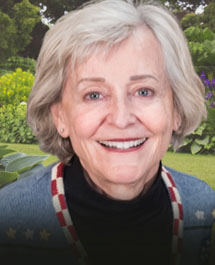
Kathy Sutphin

Genres: Fiction, Poetry, Whatever comes into my head

What kind of research goes into writing your novels and how much time does it take?

Tons of research go into writing my children’s stories.  If it’s about butterflies, I study where they live, what they eat, their life cycle.  Even though I may alter the facts to fit the fantasy, I always like to know what’s real. Recently I purchased three different books on mountain climbing, the excitement and dangers, for a fictional story set on a snow-capped mountain. Does it make sense that knowing the reality helps make the fantasy more believable?  Does, for me.

If you could offer one piece of writing advice to a novice author, what would it be?

I am a novice myself, but I believe one should write what gives you joy.  Feel the characters, feel the place, imagine yourself within the story.  Sometimes I’m a talking rabbit with lots to say.

Have you ever based characters on real people? Give us a couple of examples.

Real people, especially my daughters and their families, give me a basis for my human characters. As for animals in my fiction, some are based on actual critters, but their personalities are totally what’s going on in my own head. As a kid I was very focused on academics.  Now I’m making up for that missed playtime. Some examples:

  • In Hattie and Whisper, Hattie is a caterpillar and Whisper is fashioned after my granddaughter and her love of bugs. 
  • In a work-in-progress, there is another young girl whose best friend is a talking rabbit with an attitude – definitely me.

What kind of books do you enjoy reading and how often do you read?

I love biographies, real people, real places and true adventures. Not much for fiction except what’s in my head.  Here are a few books scattered about our house:

  • Denali’s Howl by Andy Hall
  • Explore My World Rain Forests by Marfa Delano
  • Pueblo Nations by Joe S. Sando
  • The Girl Explorers by Jayne Zanglein

Does the idea of writing energize you or exhaust you? Or both?

This is a great question. Definitely both. Some days with my coffee cooling on the desk and my little dog on my lap, I can easily put fingers on the keyboard.   However, there are days when all I do is jot ideas on scratches of paper and hope they will gel into something worth writing.

Did your formal education or upbringing/background prepare you in any way to write?

Chemistry, mathematics, computers – that’s my background.  Hard science. All fact-driven by if-then-else thinking. Funny to me as I answer this question that the if-then-else of computer programming is the perfect thought stream for writing.  IF this happens, THEN what’s next?  Is there an ELSE that changes the story. Back to IF this happens…

BIOGRAPHY

I’ve been an educator, a researcher, a chemist, software engineer and a technical manager. After 25 years with IBM, I decided to retire from the computer world and go ‘smell the roses.’ I tried planting fragrant roses, but the neighborhood deer ate them.  So, I turned to golf, walking and writing.  I love wordplay and found that writing children’s stories satisfied the make-believe part of my brain that had been overshadowed by a life in hard science.  My husband and I live in Georgetown and share four children and seven grandchildren who are scattered across four states.

Cindy Weigand

Genres:  Fiction/Non-Fiction

What has been your most rewarding moment as an author?

I’ve had two. My first book, Texas Women in World War II, Republic of Texas Press, was a finalist in the Writers’ League of Texas 2004 Violet Crown Book Awards. Also in 2004, I had an article published in Texas Co-op Power, “Yankee Doodle Gals of World War Two,” that received an Award of Merit in the DALTON Pen Writing Contest.

From these experiences, my thoughts were that I can do this. Unfortunately, I was delayed in getting back to writing anything longer than articles.

What have been some of the biggest helps for developing your writing skills? Written resources, classes or conferences, fellow writers you’ve learned from or have mentored you, other?

I recommend reading to study sentence structure, descriptions, word choice, and dialogue. Consequently, I’m a slow reader. Writing also helps. I have written several articles for various publications. It seems counterintuitive, but I exercise regularly. Sometimes it’s during these times that I work through difficult scenes, character traits, etc. An idea may just occur to me.

Instead of focusing on writing, think about story and storytelling. All stories have a beginning, a middle, and an end. Get the thoughts down. Anything can be edited and revised. Try now to bore yourself with your writing. If it’s bad, you got it out of your system. Delete it. After all, it’s only pixels.

What’s the best piece of writing-related advice that you’ve received?

Don’t be in a hurry to tell your story and make readers care about your main character.

How do you find your ideas for a book?

They find me. It starts with something happening or something I’ve read and think, “That would make a good book.” Then the notion keeps nagging at you, and you start plotting the story without consciously thinking about it. Before you know it, you’re sucked in. It may be in a genre that you never imagined that you would write a story.

Did your formal education or upbringing/background prepare you in any way to write?

My upbringing, yes. I grew up listening to my grandmother tell stories. She wrote them down as well. Through her, I developed a love of stories and storytelling. Evenings, I sat cross legged on the floor listening to her tales of her childhood living on a homestead. I was either in one of her flannel nightgowns or one of Grandpa’s t-shirts depending on the season. Both were stiff from being dried on the clothesline outdoors.

Does the idea of writing energize you or exhaust you? Or both?

The idea, putting words in pixels, and seeking publication options exhausts me, especially for longer works like novels. I find it a tedious process and am always relieved after the final edit. I don’t see me as a prolific writer or one to write a series of books ever.

BIOGRAPHY:

CINDY WEIGAND grew up on the prairie of western Oklahoma listening to her grandmother’s stories and has loved stories ever since. She is the author of numerous articles, an anthology, Texas Women in World War II, The Republic of Texas Press, an imprint of Rowman & Littlefield Publishing Group, Inc., 2003. In 2023, she published a novella, Ride of Passage which includes embellished remembrances of her childhood. She is currently working on a historical novel and has written a few screenplays. Weigand now resides in Tulsa, OK.

Website: https://CindyWeigand.com/
Facebook: https://www.facebook.com/brandbarobar
Instagram: @cindyweigand3